Saturday, December 1, 2012


Oromo: Ethiopian PM Appoints Oromo As Deputy Premier
http://www.unpo.org

Ethiopian
Prime Minister Hailemariam Desalegn has appointed two new deputy
premiers – one Oromo and one Tigray – in an attempt to create a more
ethnically inclusive government leadership.
Below is an article published by Bloomberg:
Ethiopian Prime Minister Hailemariam
Desalegn appointed two new deputy premiers to share the leadership of
the government between the four ethnic-based parties of the Horn of
Africa nation’s ruling coalition.
The second and third deputies are Muktar
Kedir, a former adviser to the prime minister and leading member of the
Oromo People’s Democratic Organization, and Information Technology
Minister Debretsion Gebremichael, who is also deputy chairman of the
Tigray People’s Liberation Front, Hailemariam told lawmakers today [29
November 2012] in the capital, Addis Ababa. Demeke Mekonnen, the
education minister and leader of the Amhara National Democratic
Movement, was appointed as a deputy prime minister in September [2012].
The appointments reflect a balancing act
within the ruling Ethiopian People’s Revolutionary Democratic Front,
said Jason Mosley, associate fellow of the Africa program at
London-based Chatham House. “They’ve now got all four parties
represented within the prime minister and deputy prime minister slots.”
Hailemariam leads a multi-ethnic bloc
from southern Ethiopia in the ruling party. He was appointed prime
minister in September [2012] following the death of former Premier Meles
Zenawi on Aug. 20 [2012].
Ethiopia, the continent’s second-most
populous nation, is a key U.S. ally in its battle against al-Qaeda in
the region. Ethiopian troops in December invaded Somalia for the second
time in four years to join the battle against al-Shabaab, al-Qaeda’s
Somalia affiliate.
Meles, an ethnic Tigray who ruled
Ethiopia for 21 years after leading a victorious rebel movement and who
oversaw one of Africa’s fastest-growing economies, died from an
infection contracted while he was recovering from an undisclosed
illness.
Today’s changes confirm that the EPRDF
is in an “awkward phase” as it tries to “rule by committee” and replace a
leadership dominated by revolutionary fighters, Mosley said in an
e-mailed response to questions today.
“Hailemariam is not in a position to centralise power, whatever his personal inclinations might be,” he said.
Among other changes, Tedros Adhanom, the
former health minister and a member of the TPLF’s politburo, was
appointed foreign minister, Hailemariam said.
Debretsion, whose ministry oversees the
state-owned Ethio Telecom monopoly and who is also chairman of the board
of Ethiopia Electric Power Corp., will coordinate the economy as a
deputy prime minister, Hailemariam said.
Muktar’s portfolio as deputy will be
governance and he also will become civil service minister, replacing
Junedin Sado, whose wife is being tried on terrorism charges.
Tedros is succeeded at the Health
Ministry by former state minister Kesete Birhan, Hailemariam said.
Tedros was given the 2011 Jimmy and Rosalynn Carter Humanitarian Award
for his leadership of
Ethiopia’s health program. His
strategies helped to reduce the mortality rate for under-5s by 28
percent in the past five years, according to the U.S. Agency for
International Development.
Kenyan University Opens Its Doors to Somali Refugees
http://www.impactnottingham.com

More recently, Somalia and the international community have been faced with further preoccupations, including the presence of an Islamist insurgency which has consolidated its power in Southern Somalia. The notorious Somali piracy operation has also proved a massive headache for the international shipping arena, prompting NATO action.
Kenya, on the other hand, provides a stark contrast to its lawless neighbour. In comparison to the rest of the East African region, it is deemed to possess a well-established and prosperous economic, political and social infrastructure and justly deserves its title as East Africa’s “economic hub”.
It is therefore unsurprising that an estimated 623,000 refugees have fled to Kenya, which is also home to Dadaab, the largest refugee camp in the world, 100 kilometres from the Kenya-Somalia border and home to the vast majority (470,000) of Somali refugees in the country.
 Dadaab has recently made headlines as Kenyatta University, whose main
campus is based in the Kenyan capital of Nairobi, has opened a second
campus there, making it the first refugee site in the world to offer
tertiary education. This is especially welcome news for the Somali
refugees in Dadaab who have so far lacked the opportunity to pursue
education further.
Dadaab has recently made headlines as Kenyatta University, whose main
campus is based in the Kenyan capital of Nairobi, has opened a second
campus there, making it the first refugee site in the world to offer
tertiary education. This is especially welcome news for the Somali
refugees in Dadaab who have so far lacked the opportunity to pursue
education further.
Some vocational training is available but many refugees want education on their doorstep, largely to overcome concerns that lack of education and employment opportunities increases the potential for disenfranchised youths to be recruited into militia and banditry. In July, eight aid agencies reported that around 164,000 children – more than 70% of those in Dadaab – were not in school. Children who did go to school were attending classes containing more than 100 pupils.
The campus in Dadaab promotes the aim to first and foremost improve education opportunities for refugees. The University has already allocated two-thirds of its places to refugees, with the rest set aside for locals. Self-sponsored students and those backed by donors are due to start next January, while students admitted under The Borderless Higher Education for Refugees Project will join early next year and have tuition fees waived.
The Kenyan government has repeatedly called for international NGOs to repatriate Somalis to safe areas in their homeland. These calls have increased in recent months, as African Union peacekeepers and Kenyan troops have begun to successfully counter Islamist insurgents al-Shabaab. The peacekeepers drove al-Shabaab out of the capital, Mogadishu, last year and have already seized several towns in the South.
 It is this recent pacification of key areas in Somalia, and the
Kenyan government’s assertion that the overcrowded camps at Dadaab pose
“serious security threats to Kenya and the region” that forms the basis
of the argument for why Somali refugees should return home.
It is this recent pacification of key areas in Somalia, and the
Kenyan government’s assertion that the overcrowded camps at Dadaab pose
“serious security threats to Kenya and the region” that forms the basis
of the argument for why Somali refugees should return home.
The NGOs, who join Somalis in welcoming the Kenyatta University Campus in Dadaab, have refuted the Kenyan government’s calls to repatriate Somali refugees, warning that it is too early to talk about sending them home given the conflict. Last month, Médecins sans Frontières (MSF) said: “While Somalia remains embroiled in armed conflict, calls for the repatriation of refugees are grossly premature. Security conditions on the ground do not allow for adequate protection or the secure delivery of humanitarian aid.”
Whether Somali refugees in Kenya should be repatriated is a burgeoning discussion but what it is certain is that the latest educational opportunity provided for the Dadaab refugees is invaluable not only in terms of how their qualifications will be able to contribute to Kenyan society but also in terms of what they can give to rebuilding their own country when the time comes. For Somalis, access to tertiary-level education will prove to be a powerful weapon and crucial to the long-term development of a shattered population.
Rebecca Meeson-Frizelle
Somalia, the “failed state” on Africa’s East coast, appears to be forever marred by disrepair. Without an effective central government since President Siad Barre was overthrown in 1991, it has been dominated by seemingly irresolvable clan warfare. This domestic crisis has only served to exacerbate issues of famine and disease which have plagued Somalia and resulted in the deaths of up to one million Somalis.
More recently, Somalia and the international community have been faced with further preoccupations, including the presence of an Islamist insurgency which has consolidated its power in Southern Somalia. The notorious Somali piracy operation has also proved a massive headache for the international shipping arena, prompting NATO action.
Kenya, on the other hand, provides a stark contrast to its lawless neighbour. In comparison to the rest of the East African region, it is deemed to possess a well-established and prosperous economic, political and social infrastructure and justly deserves its title as East Africa’s “economic hub”.
It is therefore unsurprising that an estimated 623,000 refugees have fled to Kenya, which is also home to Dadaab, the largest refugee camp in the world, 100 kilometres from the Kenya-Somalia border and home to the vast majority (470,000) of Somali refugees in the country.
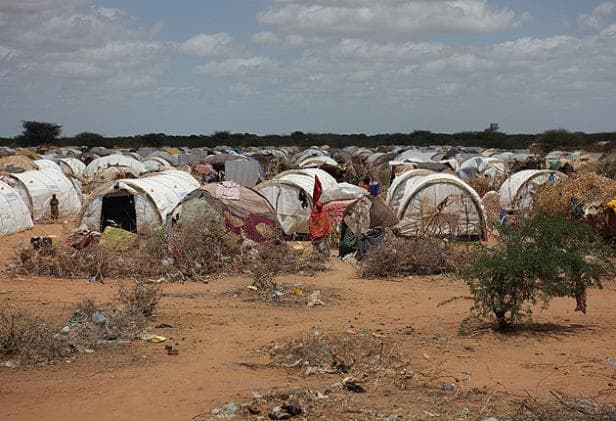
Some vocational training is available but many refugees want education on their doorstep, largely to overcome concerns that lack of education and employment opportunities increases the potential for disenfranchised youths to be recruited into militia and banditry. In July, eight aid agencies reported that around 164,000 children – more than 70% of those in Dadaab – were not in school. Children who did go to school were attending classes containing more than 100 pupils.
The campus in Dadaab promotes the aim to first and foremost improve education opportunities for refugees. The University has already allocated two-thirds of its places to refugees, with the rest set aside for locals. Self-sponsored students and those backed by donors are due to start next January, while students admitted under The Borderless Higher Education for Refugees Project will join early next year and have tuition fees waived.
The Kenyan government has repeatedly called for international NGOs to repatriate Somalis to safe areas in their homeland. These calls have increased in recent months, as African Union peacekeepers and Kenyan troops have begun to successfully counter Islamist insurgents al-Shabaab. The peacekeepers drove al-Shabaab out of the capital, Mogadishu, last year and have already seized several towns in the South.
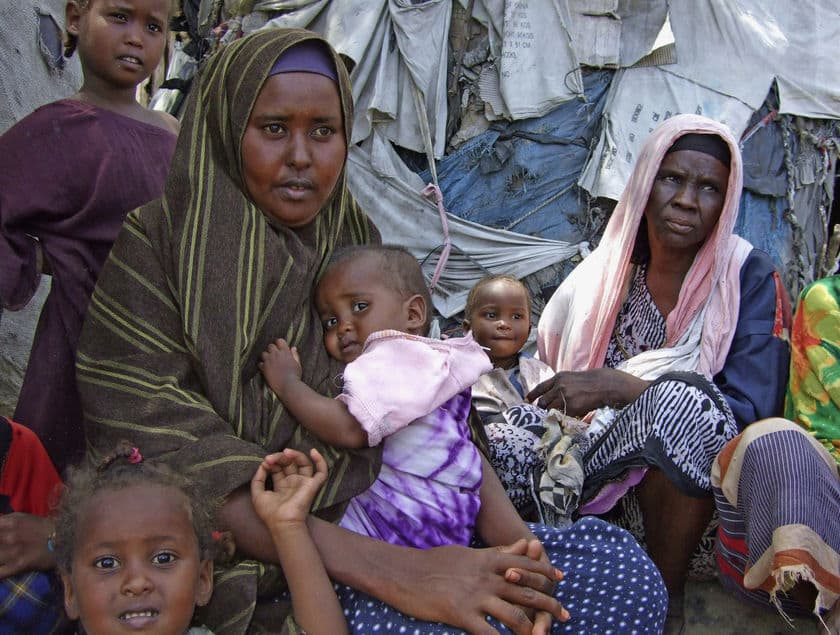
The NGOs, who join Somalis in welcoming the Kenyatta University Campus in Dadaab, have refuted the Kenyan government’s calls to repatriate Somali refugees, warning that it is too early to talk about sending them home given the conflict. Last month, Médecins sans Frontières (MSF) said: “While Somalia remains embroiled in armed conflict, calls for the repatriation of refugees are grossly premature. Security conditions on the ground do not allow for adequate protection or the secure delivery of humanitarian aid.”
Whether Somali refugees in Kenya should be repatriated is a burgeoning discussion but what it is certain is that the latest educational opportunity provided for the Dadaab refugees is invaluable not only in terms of how their qualifications will be able to contribute to Kenyan society but also in terms of what they can give to rebuilding their own country when the time comes. For Somalis, access to tertiary-level education will prove to be a powerful weapon and crucial to the long-term development of a shattered population.
Rebecca Meeson-Frizelle
Subscribe to:
Posts (Atom)