Friday, July 11, 2014

WHO warns HIV ‘exploding’ among gay men,


CAPITAL NEWS

News Home > International News >

Two gays hold each other/AFP

GENEVA, Jul 11 – HIV infections are rising among gay men in many parts of the world, the World Health Organization warned Friday, urging all men who have sex with men to take antiretroviral drugs to prevent infection. “We are seeing exploding epidemics,” warned Gottfried Hirnschall, who heads WHO’s HIV department.

Infection rates are rising again among men who have sex with men — the group at the epicentre of AIDS pandemic when it first emerged 33 years ago, he told reporters in Geneva.
While images of skeletal men dying of AIDS in the 1980s pushed the world to act, a younger generation that has grown up among new treatments that make it possible to live with HIV are less focused on the disease, he suggested.
Today, this group is 19 times more likely than the general population to be infected by HIV, Hirnschall said.
In Bangkok for instance, the incidence of HIV among men who have sex with men stands at 5.7 percent, compared to less than 1.0 percent for the overall population, he said.
In its new recommendations for combatting the HIV/AIDS pandemic, published Friday, the UN health agency therefore for the first time “strongly recommends men who have sex with men consider taking antiretroviral medicines as an additional method of preventing HIV infection”.
US authorities made the same recommendation in May.
Taking pre-exposure prophylaxis medication, for instance as a single daily pill combining two antiretrovirals, in addition to using condoms, has been estimated to cut HIV incidence among such men by 20-25 percent, WHO said, stressing that this could avert “up to one million new infections among this group over 10 years”.
The new guidelines also focus on other high-risk groups, pointing out that men who have sex with men, transgender people, prisoners, people who inject drugs and sex workers together account for about half of all new HIV infections worldwide.
- Putting overall progress at risk -
At the same time, they are often the very groups who have least access to healthcare services, with criminalisation and stigma often dissuading them from seeking help even when it is available.
When people fear seeking health care services it “will inevitably lead to more infections in those communities,” Rachel Baggaley, of the WHO’s HIV department, told reporters.
Globally, transgender women and injecting drug users, for instance, are around 50 times more likely than the general population to contract HIV, while sex workers have a 14-fold higher chance of getting infected, WHO said.
The world has overall been making great strides in tackling HIV, with the number of new infections plunging by a third between 2001 and 2012, when 2.3 million people contracted the virus.
And by the end of 2013, some 13 million people with HIV were receiving antiretroviral treatment, dramatically reducing the number of people dying from AIDS.
“Progress is however uneven,” Hirnschall said, warning that failing to address the still sky-high HIV incidence among certain groups was putting the overall battle against the deadly disease at risk.
Most countries focus the lion’s share of their attention on fighting HIV infections among the general populations, paying relatively little attention to the most high-risk groups.
This is especially true in sub-Saharan Africa, which is home to 71 percent of the some 35.3 million people worldwide living with HIV, the expert said.
Hirnschall stressed that tackling infections among the most at risk should be a general concern.
“None of these people live in isolation,” he said, pointing out that “sex workers and their clients have husbands, wives and partners. Some inject drugs. Many have children.”
Decriminalising and destigmatising these groups would greatly help bring down HIV infections among them, WHO said.
Promoting condom use, wide-spread voluntary HIV testing, treating at-risk individuals with antiretrovirals, voluntary male circumcision and needle exchange programmes figure among the other WHO recommendations for battling the disease.

More attacks in Lamu despite police claims of success

CAPITAL NEWS
capitalfm.

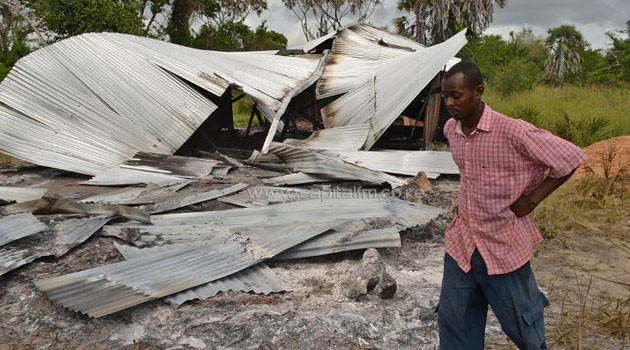
The attack occurred Thursday night at Pandanguo village, where six people were killed and houses torched two weeks ago/FILE
NAIROBI Kenya, July 11- A fresh attack was reported in Lamu on Friday, barely hours after police boasted of a major breakthrough when they arrested two suspects of Somali origin. The attack occurred Thursday night at Pandanguo village, where six people were killed and houses torched two weeks ago.
Reports from Lamu indicate that Kenya Police Reservists were also robbed of their six firearms by the armed group that also torched several houses.
There are no immediate reports of casualties from the latest attack that has renewed fears amongst residents who had been assured of maximum security after heavy police deployments.
The attack comes hours after Deputy Inspector General Samuel Arachi announced the arrest of 2 suspects of Somali origin who were found at a ranch owned by a local tycoon.

Police recovered 10 firearms from the suspects linked to previous attacks in Mpeketoni and Gamba area where over 70 people have been killed.
Police have since arrested more than 60 suspects whom they claim are linked to the continued attacks.
Despite claims by Al Shabaab terror group that it is behind the attacks, the Government says the attacks is politically and accuses Mombasa Republican Council (MRC) for the killings.
The killings in Lamu County started on June 15 when heavily armed men raided Mpeketoni where they shot men and torched a number of businesses.
They also raided the local police station in the attack that lasted more than four hours.
President Uhuru Kenyatta immediately blamed local political networks and warned that no one will be spared in the investigations regardless of their status in society.
He also ordered the transfer and prosecution of senior security personnel in the area, accusing them of sleeping on the job.
Even with the stern warning, hours later the gunmen raided Maporomoko village near Mpeketoni and more weeks later, deaths continue to occur.
Other than prominent businessman in the area being arrested and charged in court, the area Governor Issa Timamy is facing charges of murder, forceful eviction of populations and terrorism over the Mpeketoni attacks.

http://www.capitalfm.co.ke/news/2014/07/more-attacks-in-lamu-despite-police-claims-of-success/

Thursday, July 10, 2014

France: A last tango to economic disaster


Patrick L Young is expert in global financial markets working in multiple disciplines, ranging from trading independently to running exchanges.
Published time: July 10, 2014 08:32
People stand by unexportable fruits discharged in front of the fence of the local prefecture building on July 9, 2014 in Bastia, Corsica, as part of a protest gathering hundreds of local business owners and elected to protest against French government incapacity to put an end to a six weeks long conflict with employees of the SNCM ferry compagny (AFP Photo)
Both Paris and Buenos Aires boast magnificent boulevards, beloved of tourists who enjoy looking at nations whose best days are (sadly) long since past.
Watching any nation in long-term decline is always a painful experience. During the 20th century, Argentina blazed a trail from emerging market to become the world’s 10th-largest economy before the Great Depression began a process to send Argentina back to the emerging market leagues.
The ‘Argentine Paradox’ remains a tale of hubris and poor government leading to the current tragicomic Evita President Cristina Kirchner, who now presides over (mis)managed decline of lost opportunity. Kirchner’s role has merely been as a footnote to the ongoing 75-year economic malaise.
Across the Atlantic, the breathtakingly incapable President Hollande is similarly a bit part player. His failure to modernize France is only the latest chapter in 40 years of consistent budget deficits as Paris has become less relevant to business. The 5th Republic has barely begun to fall but the trajectory appears tragically defined.
Unemployment is stubbornly high, above 10 percent. with Hollande delivering record increases as his misguided socialist policies have backfired spectacularly. True it remains below the eurozone’s disgraceful 12 percent average, but France is double the rate of Germany.
Paris must now pay for decades expounding the Shangri-La journey of ‘third way’ economics. That path involved taxing with gusto, if not venom, and spending with even greater largesse. The end result has left French mired in stagnation, unable to grow post-recession.
With the French government accounting for 57.1 percent of economic activity, France is tumbling in Heritage Institute rankings for economic freedom, down to 70th place this year. Centralized state power is strangling innovation and enterprise, increasing stagnation. France remains the world’s 5th-largest economy, but this position is under threat as the old enemy, perfidious Albion, will surpass France again within a decade as south of the English Channel, the malaise continues.
The crazed socialist delusion of Hollande has merely been the last straw. Government economic perma-meddling with protectionist vigor, has driven investors away. The Wall Street Journal recently noted Foreign Direct Investment (FDI) in France has fallen by a staggering 95 percent during the past decade. Meanwhile, with youth unemployment soaring, France’s future generation has taken to working in London and other dynamic cities. Older generations may find solace in France’s famously restrictive employment laws, but job creation has reached an impasse.
This infantilization of economic debate, allied with an entrenched bureaucratic elite from the ‘grandécoles, leaves France stagnant and scared of overdue reform - while expecting unsustainable public sector pensions, often from the age of 50! In this somewhat puerile void of economic understanding, the blamestorming, anti-immigrant National Front has proven popular. This rather nasty dose of protectionist socialism, allied with a mix of Nazi racism, equates to little more than ‘an aspirin to cure appendicitis’. Nowadays the French delude themselves they can eat cake.
Within the European Union, French stasis is already creating tensions. The central Franco-German axis as perceived economic equals is nowadays a sham. Efficient flexible German workers outperform their unionized French neighbors, making Berlin a booming powerhouse capital, while Paris is left behind as a large yet curiously parochial also-ran.
France sits on the precipice of further recession, while euro propagandists proclaim the EU is on the road to recovery. French Labour Minister Michel Sapin noted the ugly truth last year remarking that the government was bust. France is bound by its own straitjacket.
Government spending must be cut, hurting an economy which has expelled entrepreneurs to foreign climes while overseas investors are exhausted with meddling officials. As members of the euro, France has no safety valve to recalibrate economically through currency devaluation.
A lame duck economy waiting for the UK and China to surpass it, France sits economically becalmed, a wondrous tourist attraction (at least when the fanatically unionized train drivers and air-traffic controllers enable travel).
While visitors may enjoy the facade of past economic success, France’s trajectory is increasingly likely to resemble Argentina, a nation where tourists buy art deco antiques popular in the heyday of the nation. Argentina is now deemed an ‘emerging market’ thanks to its self-imposed isolation from the competitive world economy.
Both Paris and Buenos Aires have beautiful boulevards blighted by petty criminals. Sadly, many legitimate ways to make a living have been strangled by the clunking fist of delusional big government.
The statements, views and opinions expressed in this column are solely those of the author and do not necessarily represent those of RT

Gaza death toll surpasses 60 as Israel’s offensive enters third day


Published time: July 10, 2014 03:31
Palestinians observe the wreckage of a car hit by an Israeli air strike killing the driver in Gaza City on July 9, 2014. (AFP Photo / Thomas Coex)
The death toll in Gaza has risen to 64 after 14 people – including seven women and children – were killed in Israeli airstrikes as Operation Protective Edge entered its third day. At least 18 children have been killed since Tuesday.
Emergency services spokesman Ashraf al-Qidra said the first strike targeted a coffee shop in the city of Khan Younis, killing six men and wounding at least 15 others, AFP reported.

The second strike hit the home of Raed Shalat at Nuseirat refugee camp in central Gaza, killing him and injuring several others, Qidra added.

Seven people – three women and four children – were killed in further strikes on two houses in Khan Younis. The Palestinian Health Ministry said five of those killed were children. Another 16 people were also wounded in the attack, the ministry added.

Palestinians inspect the remains of a car which police said was hit in an Israeli air strike in Gaza City July 9, 2014. (Reuters / Ashraf Amrah)
The newest casualties bring the death toll to 64. Airstrikes on Tuesday and Wednesday killed 21 and 29 Palestinians respectively. At least 10 women and 18 children were among the dead, according to a count based on medical reports, AFP says.

Meanwhile, Israel Defense Forces (IDF) says over 360 rockets have been fired at Israel since the beginning of Operation Protective Edge. Over 590 targets in the Gaza Strip were hit.

The offensive is the worst escalation of violence between Israel and the Palestinians since 2012.

Palestinian rockets have targeted central and southern Israel, reaching as far as Jerusalem but causing no serious casualties.

UN Secretary-General Ban Ki-moon will give a briefing at an emergency meeting of the Security Council on Thursday around the escalating Israeli-Palestinian violence. "Gaza is on a knife edge," Ban told reporters on Wednesday. "I firmly condemn the multiple rocket attacks launched from Gaza on Israel. Such attacks are unacceptable and must stop."

"I also urged [Israeli] Prime Minister [Benjamin] Netanyahu to exercise maximum restraint and to respect international obligations to protect civilians. I condemn the rising number of civilian lives lost in Gaza," he added.

Palestinian rescuers check a car hit by an Israeli air strike killing the driver in Gaza City on July 9, 2014. (AFP Photo / Thomas Coex)

http://rt.com/news/171684-gaza-death-toll-israel/