Islam is the real positive change that you need to change for being a better person or a perfect human being, you can change yourself if you read QURAN, IF YOU DO THAT !! you will change this UMMAH, say I am not A Sunni or Shia, BUT I am just a MUSLIM. Be a walking QURAN among human-being AND GUIDE THEM TO THE RIGHT PATH.
Reporter arrested by Somali security agents in the capital, Mogadishu, along with a driver, fixer and cameraman.
Al Jazeera journalist Hamza Mohamed has been detained by Somali security agents in the capital Mogadishu.
Mohamed, a British national, was arrested on Tuesday afternoon along with a driver, fixer and cameraman.
He had been in Somalia for a week on a reporting assignment.
Mohamed has frequently travelled to the country over the past few years to cover politics, economics and culture for Al Jazeera “with accuracy and integrity”, according to a statement released by Al Jazeera Media Network on Wednesday. President Hassan Sheikh Mohamud shakes hands with Al
Jazeera’s journalist in September 2014 at the Presidential Palace [Al
Jazeera]
Al Jazeera journalist Hamza Mohamed has been detained by Somali security agents in the capital Mogadishu.
Mohamed, a British national, was arrested on Tuesday afternoon along with a driver, fixer and cameraman.
He had been in Somalia for a week on a reporting assignment.
Mohamed has frequently travelled to the country over the past few years to cover politics, economics and culture for Al Jazeera “with accuracy and integrity”, according to a statement released by Al Jazeera Media Network on Wednesday.
The Federal Republic of Somalia informed Al Jazeera that Mohamed was
being held for questioning and there were no charges against him.
Al Jazeera said it has been in touch with Mohamed since his detention
and “is hoping … that he will be released without further delay”.
Mohamed had been in Somalia for a week on a reporting assignment [Al Jazeera]
•Farhiya was separated from her father when she was a baby •She didn’t see him for nearly 40 years •They were reunited thanks to a stranger on social media
“Congratulations! We found your dad!” read an email in Farhiya’s inbox.
“I couldn’t believe it when I first got the news.” she says. “It was a
dream come true. But I always kept faith this moment would one day
arrive.”
When she was growing up, Farhiya used to ask her mother what her dad was like.
“She would tell me to look in the mirror,” says Farhiya. “You talk
like him, you walk like him, you even argue like him,” her mother would
reply.
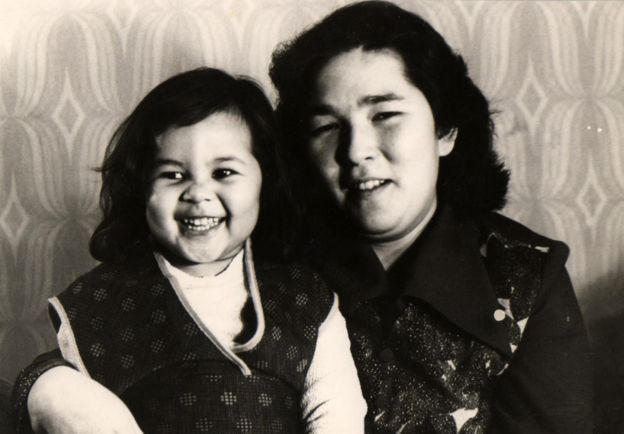
But apart from a few black and white photos, that was all she had to go on.
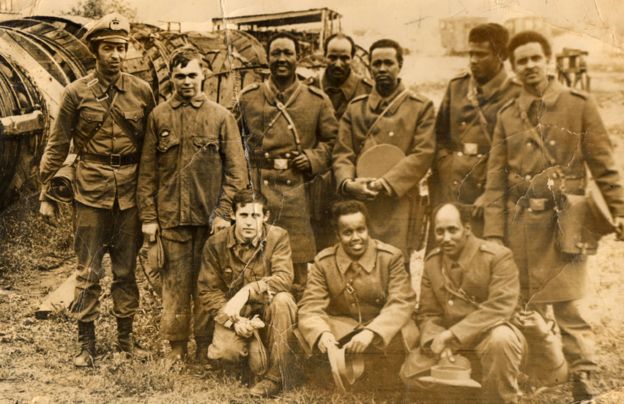
Thirty-nine-year-old Farhiya was born in Leningrad – now St Petersburg – in 1976 to a Russian mother and a Somali father.
Siid Ahmed Sharif was one of many young Somali officers invited to
study in the Soviet Union as the USSR sought to expand its influence in
Africa.
He and Farhiya’s mother planned to marry, but a year after Farhiya
was born, Somalia went to war with its neighbour, Ethiopia – and the
Kremlin sided with Ethiopia.
So very soon Somalia expelled Soviet advisers from the country and
all Somali students in the USSR, including Farhiya’s father, were told
to go home.
“My mum and I were visiting my grandma in Western Siberia when we first heard on radio about the war,” she says.
“I remember her telling me later that she immediately knew what this meant for our family, what this meant for my father.”
Sharif had 24 hours to pack his bags. With his loved ones away, he
couldn’t even say goodbye but he left a note with his parents’ address
in Mogadishu.
“I knew he did not walk out on us, he had not left us or abandoned
us,” says Farhiya. “He only left us because of the circumstances.”
But those circumstances also made it impossible to stay in touch.
The family was separated for nearly four decades.
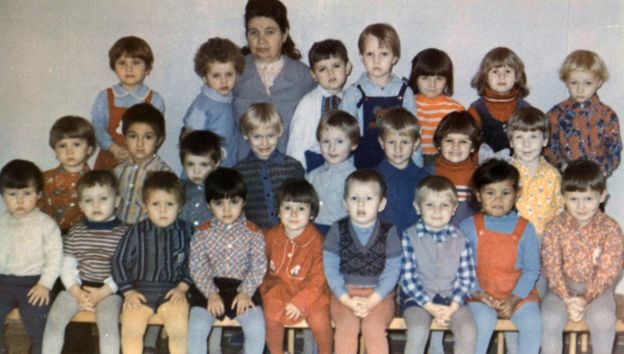
Despite this, Farhiya’s childhood was a happy one.
“I was surrounded by unconditional love from my mum. Her relatives
gave me so much love and care, I felt very special,” she says.
“I was proud of my heritage, was proud of looking different… My
classmates, my teachers at school and the university always told me I
was special.” Farhiya spoke to World Update on the BBC World Service – listen to the interview here
Farhiya always wondered where her father was and what he was like, though.
“The desire to find my dad was always there but it was when I was
about 12, I thought to myself I had to do something to find him,” she
says.
By this time the political climate had changed – Mikhail Gorbachev’s policy of glasnost (openness) was under way and Farhiya saw nothing to stop her writing to her father.
But when she sent letters to the address he had left they always
bounced back unopened. She didn’t know if they even reached Somalia.
She contacted organisations in the USSR that helped children find
their African fathers and got in touch with the Red Cross, which
provided a similar service. But her attempts were fruitless.
“Other Russian children were able to find their parents in other
African countries because it was easier. Those countries had diplomatic
relationships, embassies and people working in Russia who were going
back and forth to African countries. As for Somalia, access was
extremely limited,” she says.
From time to time she stopped actively searching but she never fully let go of the idea of finding her father.
“It was like trying and failing and then giving up for few years then
going back to the search once again and failing again,” she says.
When Somalia descended into civil war in 1991, that was a huge setback.
The war continued for nearly two decades, but as it drew to an end,
social networks were beginning to emerge and this gave Farhiya fresh
hope.
On one Russian social media site, Vkontakte, she came across a woman
helping reunite people with parents living abroad, but it turned out to
be another dead end.
“I wrote to her but she said that if my father was in Somalia she would not be able to help,” Farhiya says.
Then she started to browse pictures of Somalia on Instagram.
A lot of the photos she liked were posted by a young Somali man
called Deeq who seemed well connected, so she messaged him to see if he
could help.Deeq had cultivated a range of Somali contacts during his
years travelling in North America, Europe and the Horn of Africa. He
also had good contacts in the Somali government from his work at the
country’s embassy in Dubai.
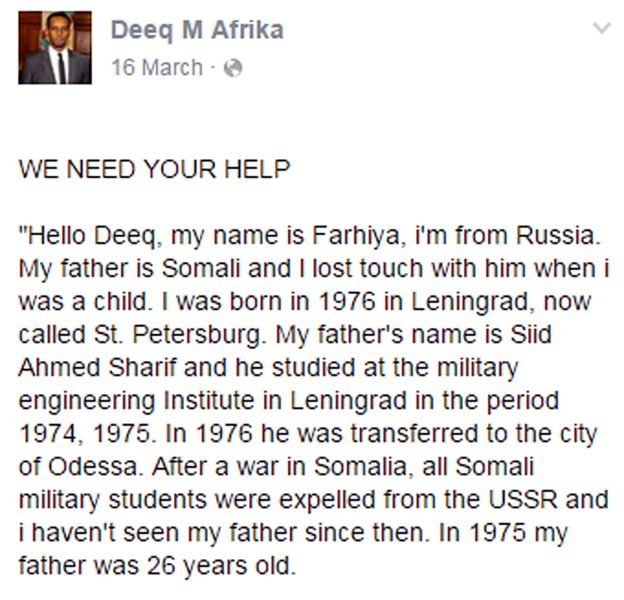
On 16 March he posted Farhiya’s plea on his Facebook page.
Comments soon started flooding in, and one from Norway stood out.
“That’s our sister Farhiya,” it read.
It was written by one of Farhiya’s half siblings, living in Oslo, and
her father was staying with her at the time.A few weeks later, after
several Skype calls, Farhiya, her mother and Farhiya’s husband travelled
to Norway to meet her father.
“He was exactly like I expected him to be,” she says. “We walked
exactly in the same manner. We talked exactly in the same voice. It was
unbelievable – the two of us were together after all this time!”
She met three of her half-sisters, and a half-brother arrived from
Sweden, where her father lives most of the time. A half-uncle also flew
to Oslo for the family gathering.
Farhiya discovered that her father had been looking for her too.
“When we spoke on Skype for the very first time, he told me about his attempts to reach us,” she says.
But she and her mother had moved when her mother had married, and
Sharif didn’t have their new address. And like his daughter, he had run
up against problems caused by the breakdown in relations between their
two countries.
These days Farhiya and her mother talk regularly with Sharif on Skype
and another meeting is planned. Next time he may visit St Petersburg.
There are many things about her father’s life Farhiya has yet to find
out, and many things she and her mother want to tell him about the last
four decades.
Fortunately Sharif still remembers the Russian he learned many years ago.
Farhiya is delighted to have discovered an extended family in
Scandinavia and Somalia, but sometimes it’s hard to take in that her
search is finally over.
“It will probably still take me a long time to believe that in my
phone, I now have the most important contact in my life – Dad.”
Source: By Abdirahim Saeed & Deirdre Finnerty for BBC World Service and BBC Magazine


![President Hassan Sheikh Mohamud shakes hands with Al Jazeera's journalist in September 2014 at the Presidential Palace [Al Jazeera]](http://www.aljazeera.com/mritems/imagecache/mbdxxlarge/mritems/Images/2016/10/19/9f7e43c28626416a9ccdea7ede9086f0_18.jpg "Al Jazeera journalist Hamza Mohamed detained in Somalia")