Published 11:23 am, Sunday, May 14, 2017
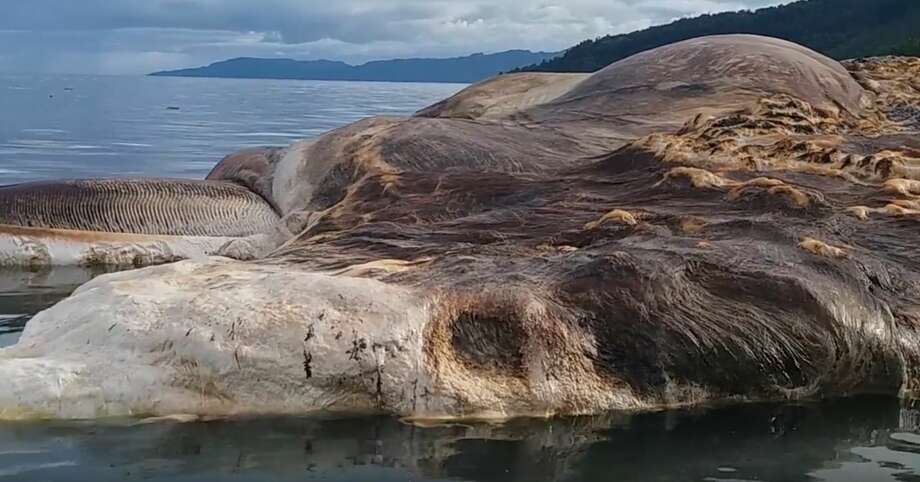
On May 12, the carcass of a huge dead sea
creature washed up on a beach in Indonesia. According to The Jakarta
Globe, the 49-foot dead creature is that of a giant squid. However,
marine experts say that the animal appears to be some sort of baleen
whale. Locals have already asked the government to come and help them
remove the body.
Media: WochIt Media
Media: WochIt Media
As images of the floating carcass rocketed around the internet, the scientific community asked itself: What is it? How did it get to an Indonesian island? And what does its presence say about climate change and whale migration habits?
The people of Seram have a more pressing query: How do we get rid of it?
Giant isopod (Bathynomus giganteus)
These
enormous creepy-crawlies are essentially underwater pillbugs. They can
grow larger than a foot long as the isopods scavenge ocean floor.
Source: Wikimedia Commons
Screen grab from a YouTube video posted by Patasiwa Kumbang Amalatu of a mysterious rotting giant corpse discovered on Tuesday on the beach of a Indonesian Island.
Blood seeping from the dead sea beast had turned the water near the coastline a bright red, which didn't stop locals from wading in for a closer look and snapping pictures.
George Leonard, the chief scientist at the Ocean Conservancy, told the Huffington Post that the rotting carcass was probably a baleen whale, judging by parts of a protruding skeleton and what appear to be baleen plates used to filter out food.
Of course, things die in the ocean all the time producing all kinds of weird phenomena. But now fishermen and villages and tourists - and their smartphones - are coming into contact with dead sea things as they go through the circle of life.
For example, fishermen off the western coast of Australia found a humongous, floating balloon of flesh that looked as if it was the first sign of an alien invasion. At first, the father and son thought they had encountered a hot-air balloon.
"When we got closer we realized it had to be a dead whale because of the smell," Mark Watkins told the West Australian.
They snapped photos of the whale balloon, then headed to shore. By then, they said, circling sharks had taken bites of the dead creature, causing it to deflate.
And earlier this year, a giant, hairy sea creature washed up on a beach in the Philippines, according to the Daily Mail. Locals believe the unusual occurrence was brought on by a recent earthquake.
Pictures showed people climbing on top of the carcass to take selfies.
Latest news videos
Seram, the largest island in the Maluku Island group, is near the migration routes for baleen whales, so it makes sense that one would be nearby. Locals have asked the government to help remove the carcass, the Huffington Post reported.
But dead whales usually sink to the bottom of the ocean, providing a years-long buffet for the creatures that dwell there, according to Live Science. The publication theorized that the whale had a bacterial infection that produced more gases or that it possibly died in warm waters, allowing bacteria to accumulate and gases to expand its body. It also could have died an unnatural death after being clipped by a ship.


No comments:
Post a Comment