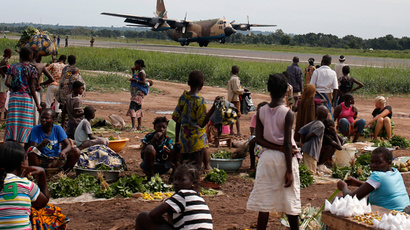
Islam is the real positive change that you need to change for being a better person or a perfect human being, you can change yourself if you read QURAN, IF YOU DO THAT !! you will change this UMMAH, say I am not A Sunni or Shia, BUT I am just a MUSLIM. Be a walking QURAN among human-being AND GUIDE THEM TO THE RIGHT PATH.
In all of the melee resulting from the shooting of Michael Brown by
Officer Darren Wilson, the media has overlooked a number of other very
important shootings of unarmed civilians by police officers. One of the
most egregious offenses is that of Officer Joseph Weekley’s fatal
shooting of 7-year-old Aiyana Stanley-Jones.
Officer Weekley recently saw manslaughter charge dropped against him, for shooting the 7-year-old while she slept.
The Detroit police officer had been on trial for involuntary
manslaughter for shooting and killing the young girl during a 2010
police raid.
But early in October, Wayne County Circuit Court Judge Cynthia Gray
Hathaway granted a motion which Weekley’s attorney had filed, arguing
for the dismissal of the felony charge he faced in the young girl’s
death.
The trial was brought to an end while the Michigan Court of Appeals reviewed an emergency appeal of the ruling.
Presiding Judge Michael Talbot issued the order to deny the appeal and allow the judge’s dismal to stand.
“Although I find that the trial court erred in form and substance in
granting defendant’s motion for directed verdict, we are barred from
reviewing that decision,” Talbot wrote.
The shooting happened just after midnight, back on May 16, 2010.
A SWAT team had conducted a raid to search for a murder suspect. Weekly ended up being first through the door.
There was even a film crew on hand to film for a reality show about
murder investigations. Weekley says that another SWAT member had thrown a
flash-bang grenade, which temporarily blinded him. That’s when he fired
the shot that killed Aiyana who was asleep on the couch in the front
room of the house.
It’s rare for a mainstream media outlet to defend anyone but the
police, but recently, during CNN’s live coverage of the Baltimore
unrest Monday night commentator Marc Lamont Hill made a bold and
controversial statement…
Hill said that what was taking place was “not a riot” but
“uprisings.” These uprisings, he said, were in response to
African-Americans “dying in the streets for months, years, decades,
centuries” as a direct result of “police terrorism.”
Not surprisingly, CNN Tonight host Don Lemon, disagreed, urging that “there shouldn’t be calm tonight.”
But Hill doubled down on his earlier statements, saying that when
there are “black people…dying in the streets for months, years, decades,
centuries” there is a need for “resistance to oppression and when
resistance occurs, you can’t circumscribe resistance.”
He noted the irony that the general public has been getting “more
upset about the destruction of property than the destruction of black
bodies.”
“We can’t ignore the fact that the city is burning, but
we need to be talking about why it’s burning and not romanticize peace
and not romanticize marching as the only way to function. I’m not saying
we should be hurting, I’m not saying we should be killing people, but
we do have to understand that resistance looks different ways to
different people and part of what it means to say black lives matter, is
to assert our right to have rage – righteous rage, righteous
indignation in the face of state violence and extrajudicial killing.
Freddie Gray is dead. That’s why the city is burning and let’s make that
clear. It’s not burning because of these protesters. The city is
burning because the police killed Freddie Gray and that’s a distinction
we have to make.”
CNN political commentator Van Jones strongly disagreed, saying the following:
“Yes it is true. Dr. King said riots are the language of
the unheard. It is, in fact true, and important that people recognize
that the conditions in Baltimore for black teens are worse than
conditions for teens in Nigeria. So, the outrage should be of course
about the incredible injustice both from the police, but also the
economic deprivation and I want to have a conversation. But I do want to
be able to draw a line to say that the righteous outrage – we can take a
moral position, as a part of this movement. Black lives matter, but you
know what? Black jobs matter, and black businesses matter, and black
neighborhoods matter and I don’t think it’s appropriate for us to give
any kind of suggestion that the destruction of black communities is a
positive or can be positive in this context.”
Hill responded that he was “not saying we should see the destruction
of black communities as positive. I’m saying that we can’t have too
narrow a perception of what the destruction of black communities mean
and it seems we exhausted more of our moral outrage tonight and not the
364 days before tonight.”
Diabetes
is a very common disease in Western society. With more people becoming
over weight, diabetes and heart disease are often quick to follow. Bad
dieting and food intake are common causes of diabetes, convenience food
and busy schedules make it too easy for people to fall into a trap of
lazy and bad habits. By implementing a more knowledgeable stance to your
nutritional intake, you will be able to remain healthy and greatly
reduce the risk of diabetes. Here are 11 foods that can help to combat
diabetes.
1. Guava
Guava – healthmeup
This exotic fruit has many reasons that make it a great food for
combating diabetes. A study conducted by I-Shou University of Taiwan
revealed that consuming guava without the skin can reduce sugar
absorption in the blood stream. Guava is also high in vitamin C which
can reduce the damage of cells linked with diabetes
2. Beef
Beef – Alpha
Many ‘experts’ claim that lean red meat is bad for you; when in fact
red meat such as beef is great for combating diabetes. One should choose
lean cuts such as fillet, sirloin or rump. Protein will keep you fuller
for longer and fight off unwanted cravings for unhealthy foods, less
hunger means less insulin spikes.
3. Avocado
Avocado – Olle Svensson
The green machine that is creamy and rich, a rare food that does not
damage your digestive tract. Avocado is full of monounsaturated fat and
is slow digesting, keeping blood sugar from spiking too much after
meals. The good fat in avocado can even help reverse the effects of
insulin resistance and stop any risks of diabetes.
4. Flaxseed
Brown Flaxseed – Alisha Vargas
This may sound like bird seed but it isn’t. These shiny brown seeds
tackle diabetes in 3 different ways. Flaxseed is rich in protein,
healthy fats and fibre and a great source of magnesium. Magnesium is an
important mineral that helps cells use insulin and metabolise fat. A
true worthy addition to any diabetics’ diet, for longer lasting
flaxseed, buy them whole in bulk and keep refrigerated.
5. Peanut butter
Peanut Butter – Anna
A recent study revealed that peanut butter can stave off people’s
appetite for 2 hours longer; compared to a high carb, low fibre snack.
Monounsaturated fats contained in peanut butter are also a healthy
support for your metabolism. Try making a peanut butter dip for your
veggies and always buy organic brands, peanut butter can and will go
with more than just jelly so it’s up to you to experiment!
6. Mangosteen
Mangosteen – Matt Saunders
Garcinia mangostana is a tropical fruit that grows in India and the
Philippines. Udani, Barrett, and Singh (2009) are authors of the famous
book Inflammation, Lifestyle and Chronic Diseases: The Silent Link who
studied the effects of mangosteen in the human body. An edible portion
of 100g can treat the symptoms of obesity by reducing inflammation of
adipose tissue.
7. Apples
An apple a day – Alice Popkorn
An apple a day may not keep the doctor at bay but they can certainly
help. They are low in calories but high in fibre, (4g per apple!) and
stop hunger and insulin spikes between meals. Apples also counteract bad
cholesterol and stop erratic spiking of the blood sugar in us. Granny
Smith and Red Delicious are two of the most nutritious varieties of
apples available. Have a sliced apple with your oats and milk in the
morning to create a perfectly balanced breakfast.
8. Eggs
Eggs – Pietro Izzo
Nicholas Fuller, PhD, from the Boden Institute Clinical Trials Unit,
University of Sydney, Australia. Carried out tests that proved that
after eating eggs for 3 months, one had better appetite control than
those who did not eat eggs. People with type 2 diabetes also showed no
signs of increased cholesterol. Egg protein is full of amino acids and
other vital nutrients, people think that eating egg yolks is bad for you
but one or 2 a day will not harm most people. Eggs can hold of hunger
pangs also making them a top selection for people wishing to fight off
diabetes
9. Fish
Fish – Kiks Balayon
A well-known problem for diabetic people is the risk of heart
disease. Eating one portion of fish a week can reduce your chance of
heart disease by 40%! Fish contains healthy fats that have a positive
effect in the body proving that not all fats are bad for you! The fatty
acids help reduce inflammation in the body, along with diabetic symptoms
like insulin resistance.
10. Broccoli
Brocolli – Matt Watson
No food list is complete without this wondrous vegetable. Broccoli is
known as a super food and will often make most top ten lists. It is
packed full of anti-oxidants and enough Vitamin C for your whole day in
just one serving. Broccoli also has good amounts of chromium which
regulates safe blood sugar in your veins and arteries.
11. Barley
Barley – net_efekt
Consuming barley grains can reduce a rise in blood sugar by a
whopping 70% after meals. Barley grain is able to slow down digestion
due to soluble fibre, giving you slow, sustained energy from your
carbohydrates. Many would even argue that it has a better efficiency
rating than brown rice in terms of sustained energy. Barley also
contains chromium, magnesium and vitamin B1.
As
part of retaliatory strikes over Saudi Arabia's ongoing aggression, the
Yemeni army, backed by Ansarullah fighters, has hit a Saudi airbase in
Saudi Arabia's second largest province of al-Riyadh with a Scud missile,
a spokesman for the Yemeni army says.
“The missile units
of our heroic armed forces launched today a Scud missile at the Al
Sulayyil missile base in Riyadh province ... it comes as a response to
the crimes of the brutal Saudi aggression,” Yemen's state-run news
agency Saba quoted Brigadier General Sharaf Luqman, as saying on
Tuesday.
There has been no immediate reports of possible casualties in the attack. Yemen’s army hits a Saudi airbase in Saudi Arabia's second largest province of al-Riyadh with a Scud missile on June 30, 2015.
“Our
heroic armed forces fired a Scud missile today on Al Sulayyil missile
base in Al-Dawaser valley in the province of Riyadh,” Luqman said,
adding, “The missile hit its target directly with high accuracy.”
The
Yemeni spokesman further said that they will continue hitting targets
on the Saudi soil, adding, "We have lots of surprises in the coming
days."
In a separate development on the same day, a
number of Saudi forces were killed after Yemeni forces targeted Saudi
military sites in Saudi Arabia’s southwestern provinces of Najran and
Dhahran al-Janub, located in the southwestern Asir region.
The Yemeni attacks came in response to Saudi aggression against Yemen which has been conducted incessantly since March 26.
In
one of the airstrikes in the Yemen province of Ma’rib on Tuesday, 12
members of a family and two others sustained injuries. Similarly, three
people, including a child, were killed and four others were injured in a
Saudi airstrike on a Yemeni village in the province of Lahij. Yemenis
search for survivors under the rubble of houses in the UNESCO-listed
heritage site in the old city of Yemeni capital Sanaa, on June 12, 2015
following an overnight Saudi air strike. (AFP Photo) Yemeni houses and markets struck
Meanwhile,
Human Rights Watch said on Tuesday that Saudi Arabia has destroyed
houses, markets and a school, and killed dozens of people in its
aggression against Yemen.
The rights group also referred to the
Saudi attacks on the northern city of Sa’ada, saying, "Not only were
these attacks unlawful because of the apparent absence of any military
target, but they contributed to civilian hardship in the city, where
people are suffering from shortages of food, water, and fuel.”
The
report said that at least 59 people, including 14 women and 35
children, were killed in Saudi attacks on the city from April 6 to May
11.
Saudi Arabia has been pounding different areas in Yemen
without any authorization from the United Nations and regardless of
international calls for the cessation of its deadly campaign against the
impoverished Arab country.
The main purposes behind the Saudi
aggression against Yemen are to weaken the Houthi Ansarullah movement
and restore power to the fugitive former president, Abd Rabbuh Mansour
Hadi, a staunch ally of Riyadh.
UN Human Rights spokesman Rupert
Colville said on June 16 that at least 1,412 Yemeni civilians, including
210 women, had been killed and a further 3,423 injured since the start
of the Saudi aggression.
IA/KA/HMV http://www.presstv.com/Detail/2015/06/30/418203/yemen-Saudi-Arabia-Scud-missile
South Sudan's army raped then
torched girls alive inside their homes during a recent campaign notable
for its "new brutality and intensity".
Rights
investigators from the UN mission in South Sudan (UNMISS) warned of
“widespread human rights abuses” including gang-rape and torture in a
report based on 115 victims and eyewitnesses from the northern
battleground state of Unity, scene of some of the heaviest recent
fighting in the 18-month-long civil war.
The military,
the Sudan People’s Liberation Army (SPLA), launched a major offensive
against rebel forces in April, with fierce fighting in Unity state’s
northern Mayom district, once a key oil producing area.
“Survivors
of these attacks reported that SPLA and allied militias from Mayom
county carried out a campaign against the local population that killed
civilians, looted and destroyed villages and displaced over 100 000
people,” the UN said.
“Some of the most disturbing
allegations compiled by UNMISS human rights officers focused on the
abduction and sexual abuse of women and girls, some of whom were
reportedly burnt alive in their dwellings.”
Investigators
said they had collected at least nine separate incidents where “women
and girls were burnt in tukuls [huts] after being gang-raped” as well as
scores of cases of sexual violence, many the rape of mothers in front
of their children. Red hot coals Photographs
in the report seen by AFP show the burnt circles left after huts were
set on fire, with all buildings apparently razed to the ground.
One
witness described seeing “government forces gang-raping a lactating
mother after tossing her baby aside,” the report read, another described
how troops made a women squeeze “burning-red coals” in her hands to
reveal the whereabouts of rebels or cattle.
Rebel forces
have also been accused of carrying out atrocities, including rape,
killings and the recruitment of armies of child soldiers.
There
was no immediate response from the army, who has previously dismissed
allegations of rights abuses. The UN said the report had been handed to
government officials, who were yet to comment on its findings.
The
UN said they had tried to visit the sites of the atrocities described
by witnesses, but were “routinely denied access” by the army.
UNMISS chief Ellen Margrethe Loej called for “unfettered access” to investigate the reported crimes.
“Revealing
the truth of what happened offers the best hope for ensuring
accountability for such terrible violence and ending the cycle of
impunity that allows these abuses to continue,” she said. ‘Killing, rape, abduction’ Civil
war began in December 2013 when President Salva Kiir accused his former
deputy Riek Machar of planning a coup, setting off a cycle of
retaliatory killings that have split the poverty-stricken, landlocked
country along ethnic lines.
The upsurge in fighting “has
not only been marked by allegations of killing, rape, abduction,
looting, arson and displacement, but by a new brutality and intensity,”
the UN statement added.
“The scope and level of cruelty
that has characterised the reports suggests a depth of antipathy that
exceeds political differences.”
The UN children’s agency
said in a report earlier this month that warring forces have carried out
horrific crimes against children, including castration, rape and tying
them together before slitting their throats.
Four years
since South Sudan won its independence, two-thirds of the country’s
12-million people need aid, according to the UN, and one-sixth have fled
their homes.
Kiir and Machar met over the weekend in the
Kenyan capital Nairobi for the latest push to strike a peace deal, but
rebel spokesman Mabior Garang said they “failed to bear any tangible
results”.
At least seven ceasefires have been signed and broken during successive rounds of bad-faith talks.
Even
as the Nairobi talks were underway, a key regional capital in South
Sudan reportedly changed hands once again as a renegade tribal warlord
attacked the town of Malakal and declared his allegiance to Machar’s
rebels.
A rebel statement said that ex-government general
Johnson Olony – accused by aid agencies of forcibly recruiting hundreds
of child soldiers – was in “full control” of the ruined town of
Malakal, the state capital of Upper Nile, but the army dismissed the
claim.
– AFP
It's a well-known fact that no two fingerprints are
the same – but apparently no two “smellprints” are the same, either.
Scientists have discovered a way to characterize our sense of smell, and
the unique labeling may reveal genetic information about us. Every human has about
six million smell receptors of around 400 different types. The
distribution of those receptors varies from person to person,
resulting in unique senses of smell – referred to by the study's
researchers as the “olfactory fingerprint.” Thestudy, conducted by researchers from the
Weizmann Institute of Science in Israel and published in the
Proceedings of the National Academy of Sciences, tested 89
participants on how strongly 28 odors matched 54 adjectives.
Those adjectives included“nutty,”“pleasant,”“lemony,”“masculine,”“fishy,”“citrus,”and“sour,”among others.
Based on those descriptions, the researchers developed a complex
mathematical formula for determining how similar any two odors
are to one another in the human sense of smell.
The benefit of this formula is that it “does not require the
subjects to agree on the use and applicability of any given
verbal descriptor. Thus, the fingerprint is odor dependent but
descriptor and language independent,” study author Lavi
Secundo said, according to an Institute press release.
All 89 participants were found to have distinct olfactory
fingerprints. The researchers calculated that just seven smells
and 11 descriptors could have identified each person in the
group.
They went on to say that only 28 odors would be needed to
“fingerprint” some two million people, adding that 28
odors make for 378 different pairs, each with a different level
of similarity. “This provides us with a 378-dimensional
fingerprint,” the authors said.
They also stated that 34 odors, 35 descriptors, and around five
hours of testing per person could result in the identification of
about 7 billion different people – roughly the entire human
population.
In
another series of experiments, the team found that people with
similar olfactory fingerprints showed similarity in their genes
for immune system proteins linked to body odor and mate choice.
This means that people with similar olfactory fingerprints
probably smell like others, Secundo said, ScienceNews
reported.
The study also found that an immune antigen called HLA used to
assess matches for organ donation correlated with certain
olfactory fingerprints.
Study author Noam Sobel believes the olfactory fingerprint could
someday be used to develop smell-based social networks. He says
it could also become a diagnostic tool for diseases that affect
the sense of smell, including Parkinson's.
The researchers also say the “smellprint” could be used
for security purposes, as it would be nearly impossible to steal
or copy a person's unique olfactory fingerprint.
If you love the taste of an ice cold soda, you may
want to determine whether the flavor is actually worth the risk. Sugary
drinks are killing around 184,000 people each year, according to a new
study. Theresearch,published in the American Heart
Association's Circulation journal, points the finger at
sugar-laden drinks ranging from sodas to sweetened iced tea,
fruit drinks, and sports/energy drinks.
"Many countries in the world have a significant number of
deaths occurring from a single dietary factor, sugar-sweetened
beverages,” said study author Dariush Mozaffarian from Tufts
University in Boston.
According to the research, most of
the 184,000 global deaths are from people who die of diabetes due
to the consumption of “sugar-sweetened beverages”
(SSBs).
Another 45,000 die globally from cardiovascular diseases caused
by sugary drink consumption, and 6,450 people die from cancers
linked to sugar-laden beverages.
Those numbers prompted Mozaffarian to advise soda lovers to
“substantially reduce or eliminate sugar-sweetened beverages
from [their] diet.” “There are no health benefits from sugar-sweetened beverages,
and the potential impact of reducing consumption is saving tens
of thousands of deaths each year,” he added.
Although the numbers cite global
deaths, Mexico had the highest death rate due to sugary drinks,
with 450 deaths per million adults. It was followed by the US,
with 125 estimated deaths per million adults.
Seventy-six percent of deaths related to sugary drinks occur in
low-to-middle income countries, according to the report.
The findings “indicate the need for population based efforts
to reduce SSB consumption throughout the world through effective
health policies and targeted interventions directed at stemming
obesity-related disease,” the report states.
The research examined 62 dietary surveys from more than 611,000
people, conducted between 1980 and 2010 across 51 countries. The
participants represented almost two-thirds of the world's adult
population.
Published on Monday, the study is the first comprehensive
assessment of worldwide deaths attributable to sugar-sweetened
beverages (SSBs). It was conducted by an international team of
researchers from Harvard, Tufts, and Washington universities in
the US, and Imperial College London.
A Muslim woman is suing Michigan police for allegedly
coercing her into removing her Islamic headscarf after being arrested
for a parking violation. The official lawsuit was filed on Tuesday by the
American-Arab Anti-Discrimination Committee (ADC) against the
city of Dearborn, a town just south of Detroit. It states the
town’s police forced Maha Aldhalimi to remove her Islamic
headscarf in order to take a mugshot after her arrest for a
parking violation.
Aldhalimi was arrested on September 15, 2014, when the police saw
her vehicle parked in a no-parking zone outside of a Wal-Mart.
After checking the license plate and registration number, “a
warrant for her arrest for an unpaid parking violation”
popped up, according to the lawsuit.
The police then proceeded to arrest the woman and brought her
down to the station where they allegedly forced her to remove her
hijab for a booking photo.
At first, Aldhalimi refused to remove the headscarf, explaining
that it violated her religious beliefs. The officers then told
the woman “to remove her hijab or it would be removed
involuntarily against her will,” the lawsuit said.
She began to cry and exhibited distress. Her son, who arrived at
the station, confirmed that his mother’s religious beliefs
prohibited her from taking off the hijab in front of strangers.
Aldhalimi said she “was shivering and crying from the
humiliation and distress of the encounter and orders.”
Following the threats from the police, she was persuaded to take
off the headscarf against her will.
“The city of Dearborn should know that the covering of a
Muslim woman is a religious observance,” ADC Michigan
director, Fatina Abdrabboh, told MyFoxDetroit. “The woman was
arrested for a year or two-year-old unpaid parking violation. She
was arrested in a public place in a local Walmart and she
presented no threat except perhaps for her frantic crying and
begging to not have her head scarf removed.” “The plaintiff was not provided a woman officer despite her
requests for one,” Abdrabboh said. “And having a woman
take the mugshot is a very good first start at addressing the
problem.”
This is far from the first complaint placed against the Dearborn
Police for violating the rights of Muslim women wearing hijabs.
Several separate lawsuits have been filed against the Dearborn
Heights Police and the Oceana County Sheriff by Muslim women this
year.
The city of Dearborn has not issued any comments on the lawsuit
or how its police force treats Muslim women.
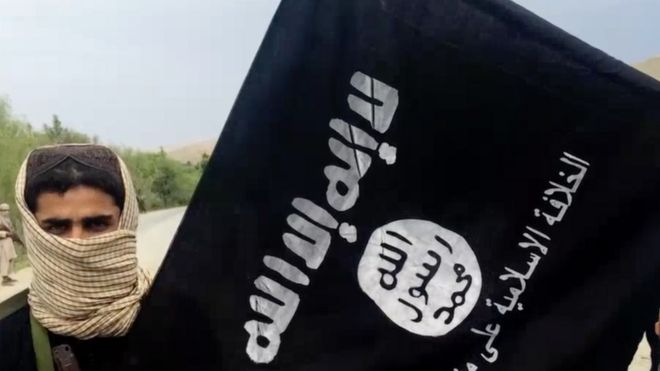
There have been serious clashes between Afghan militants allied with Islamic State and Taliban fighters
A
senior US commander in Afghanistan has said that fighters allied with
Islamic State (IS) are in contact with the militants' Syrian
headquarters.
Gen Sean Swindell, leader of the unit training
Afghan special forces, said that disgruntled Taliban fighters have
established a "franchise".
But he added that IS in Afghanistan is not as serious as in Libya or Iraq.
There have been serious clashes between the new group and the Taliban in eastern Afghanistan in recent weeks.
IS threats
Both
sides have ignored appeals for unity and the fighting has spread across
several districts in Nangarhar province, not far from the Tora Bora
cave complex where former al-Qaeda leader Osama Bin Laden once hid.
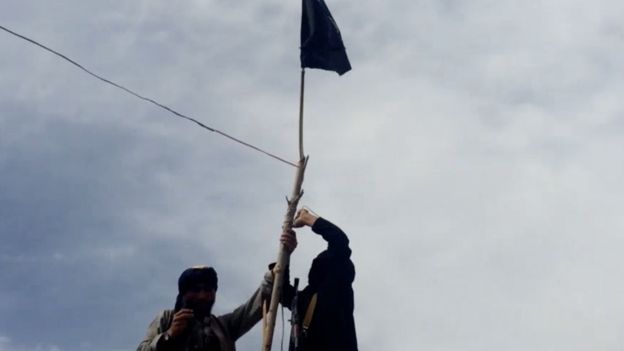
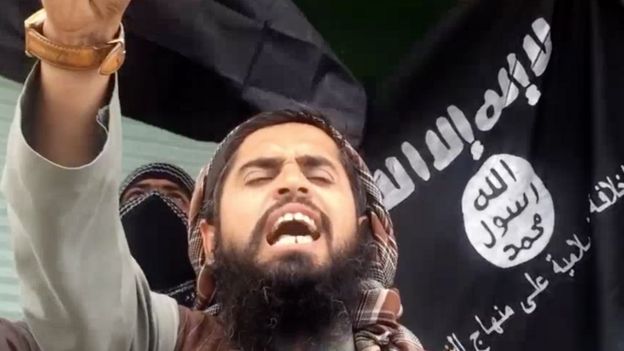
Part
of the website of the main IS group is now reserved for material about
"IS in Khorasan", using an old name for Afghanistan.
A recently posted statement threatens Taliban fighters with death if they do not join IS.
"Why
are you fighting with the Islamic State? Do you want to dig your own
grave? Do you want to be beheaded, and have your homes destroyed? Do you
think you are stronger than those Iraqi militias behind whom the
Americans are standing?" it says.
The Taliban have written to the IS chief, appealing for unity between the two groups
The statement appears to be a rebuff to a direct appeal by the Taliban for unity between the two groups.
In
a statement to IS leader Abu Bakr al-Baghdadi, the Taliban said that
there could not be "two flags" in the insurgency in Afghanistan.
It said that it would "result in mujahideen strength being fragmented."
But
in contrast, during their offensive in Nangarhar, IS supporters have
been seen urging people to kill the leader of the Taliban, Mullah
Mohammed Omar.
They argue that there is already one caliph - Baghdadi.
Security challenge
The first signs of "IS in Khorasan" were in Pakistan's frontier region in January.
A number of ex-Taliban fighters, including one Afghan commander, pledged allegiance to the new group.
Now,
backing up IS threats, pictures of Taliban fighters being both beheaded
and shot have appeared on social media in Afghanistan and Pakistan.
The
new battles are a complex security challenge for Afghan forces in their
first summer of fighting without international combat support on the
ground.
The Farah province in the west is also facing threats from the IS "franchise"
Gen Swindell said that Afghan special forces are conducting around 130 raids a week.
Only
in a handful was there direct support by international troops. Even
then, it was not in a combat role but involved advising in command and
control centres.
Gen Swindell said that Farah province in the west
is also facing threats from the new movement. They were in a
"competition for resources" with the Taliban.
The fighting has led to renewed misery for Afghan civilians caught between the two sides.
Thousands of people have fled their homes to avoid the fighting in Nangarhar.
This
year has seen more than 4,200 civilians killed or injured across the
country. It look as if it will set a dismal new record of the highest
casualties by the end of the year, topping even 2014.
Angela Evans has told the BBC how she lay face down in the sand so that she was not killed in the Tunisian beach attack.
Ms Evans, from King's Lynn in Norfolk, described hearing the gunman when she and her friend were relaxing on the beach.
She
said: "You can't run, you're an open target running, he was shooting
anyone on their feet as well as people on sun loungers, he was just
killing them."
When the pair thought it was safe, they ran to
another hotel. She said staff there hid her and her friend in an office
until it was over.
By: 9news.com.au Source: 9news.com.au
Terror group ISIL has released a picture, purported to be the gunman
who killed 37 people after opening fire at a popular tourist beach in
Tunisia.
The man, named as local student Seifeddine Yacoubi – but dubbed Abu
Yahya al-Qayrawani by ISIL – hid an assault rifle inside an umbrella as
he carried out his attack at El Kantaoui, north of Sousse, spraying
tourists and locals with bullets.
But ISIL has since released an image of the 23-year-old, via its social media accounts, claiming responsibility for the attack.
The pictures also included a statement: “Our brother, the soldier of
the Caliphate, Abu Yahya al Qayrawani, reached his target the Imperial
hotel despite the security measures”.
Authorities believe the gunman was intentionally targeting tourists
at the well-known holiday spot and witnesses have claimed the attacker
laughed as joked as he opened fire on sunbathers, specifically targeting
British, French and other tourists as part of his rampage.
European and British tourists were among the 39 casualties, with dozens more injured.
The gunman was eventually shot dead by police.
Despite ISIL’s claims local authorities said no formal links to a particular group had been established.
In a statement on Twitter, ISIL said Yacoubi was a “solider of the
caliphate” and most of those killed were “subjects of states that make
up the crusader alliance fighting the state of the caliphate”.
The statement also promised more attacks.
Tunisian interior ministry spokesman Mohamed Ali Aroui told AFP: “The assailant was killed.”
Secretary of State for Security Rafik Chelly told Mosaique FM the gunman was a Tunisian student unknown to the authorities.
“He entered by the beach, dressed like someone who was going to swim,
and he had a beach umbrella with his gun in it. Then when he came to
the beach he used his weapon,” Chelly said.
British tourist Ellie Makin saw the attack unfold.
“All I saw was a gun and an umbrella being dropped,” she told ITV television.
“Then he started firing to the right hand side of us. If he had fired
to the left I don’t know what would have happened, but we were very
lucky.”
Other tourists said there were scenes of mass panic after the shooting started.
“I knew there was trouble when I heard a gunshot, you know, but then
when I came out there was a loud explosion so I said ‘oh, this is really
happening now,’ Irish tourist Anthony Thomstad said.
Holidaymaker Susan Ricketts said people were “running and screaming… crying and going hysterical”.
Briton Olivia Leathley, 24, heard “loud bangs” and when she went to
the lobby to find out what was happening, she saw a woman whose husband
had “been shot in the stomach in front of her”.
“She got dragged away by hotel reps trying to get her to safety but she was a complete mess. She was in hysterics,” she said.
“All she said was that he’d been shot and that he was there bleeding
on the beach and he was just saying, ‘I love you, I love you’, and then
his eyes rolled back into his head.”
Tunisians, Britons, Germans, Belgians and at least one Irish citizen are among the dead.
Yacoubi’s attack was one of a wave of terrorist incidents overnight that left dozens dead in several countries.
A man in France is being held in custody after allegedly beheading a man at an industrial gas factory and causing an explosion.
ISIL has also claimed responsibility for a suicide bombing attack in a Kuwaiti Shiite mosque that left 27 dead.
British Foreign Secretary Philip Hammond said in London five Britons had been killed and warned that the toll could rise.
In Dublin, Foreign Minister Charles Flanagan said an Irish woman was among the dead.
World-wide, national leaders have condemned the attack.
The deputy British ambassador to Tunisia Rufus Drabble said his government was horrified by the incident.
“The UK government is sickened by this terrible, despicable act against both Western tourists and Tunisian nationals,” he said.
“Our priority now at the moment is we’ve got two teams down here, at
the resort. Our priority has got to be the injured British nationals and
those who were affected.”
Tunisia’s Prime Minister has also declared the war on terrorism was now a “national duty” and has called on citizens to unite.
President Francois Hollande of France and his Tunisian counterpart
Beji Caid Essebsi both expressed their “solidarity in face of
terrorism”, a statement in Paris said.
Essebsi later told AFP Tunisia cannot stand up to the jihadist threat alone, and urged a unified global strategy.
In Australia, the Abbott government called for solidarity with all three countries targeted this week.
“The Australian government condemns these attacks in the strongest possible terms,” Foreign Minister Julie Bishop said.
“We stand in solidarity with the people of France, Tunisia and Kuwait in the fight against terrorism.”
In Cairo, a leading Sunni Muslim institution called the “heinous”
shooting a “violation of all religious and humanitarian norms”.
The shooting was the worst in modern-day Tunisia and followed a March
attack on Tunis’s Bardo National Museum that killed 21 foreign tourists
and a policeman.
IS claimed responsibility for the Bardo attack, although Tunisia says it was carried out by an Algerian jihadist.
Tunisia, birthplace of the Arab Spring, has seen a surge in radical
Islam since veteran president Zine El Abidine Ben Ali was ousted in the
2011 revolution.
Dozens of members of the security forces have been killed in jihadist attacks since then.
In October 2013, a suicide bomber blew himself up in a botched attack
on a Sousse beach while security forces foiled another planned attack
nearby.
Even before the latest attack, Tunisia’s tourism industry had been
bracing for a heavy blow from the Bardo shooting, but was determined to
woo tourists with new security measures and advertising.
Tourism Minister Salma Rekik announced a raft of measures to bolster
security in tourist areas and roads leading to them, and to tighten
airport controls.
The tourism sector, which accounts for seven percent of Tunisia’s GDP
and almost 400,000 direct and indirect jobs, had already been rattled
by political instability and rising Islamist violence. With AFP.
تودنهوفر حصل على أمان البغدادي وسمح له بالإقامة في المناطق الخاضغة لتنظيم الدولة (الجزيرة)
قال الصحفي الألماني يورغن تودنهوفر إن العمليات العسكرية التي يقوم بها تنظيم الدولة الإسلامية في سوريا
والعراق لا علاقة لها بالإسلام، وإنها تلحق الضرر بالعالم الإسلامي
وبالإسلام الذي يحارب باسمه، داعيا مقاتليه الأجانب إلى التحرر من التنظيم
والعودة إلى بلدانهم.
جاء ذلك في خطاب مفتوح (راجع نص الخطاب) وجهه تودنهوفر إلى زعيم تنظيم الدولة أبو بكر البغدادي
استهله بتقديم الشكر له على ما حظي به من حماية طيلة مكوثه في الأراضي
الخاضعة للتنظيم في سوريا والعراق، لكنه طالبه في الوقت ذاته "بدعوة المزيد
من الصحفيين الأحرار من كل العالم بدلا من إعدامهم".
وبعد أن كتب أنه يتفهم دوافع كل عربي في مقاومة التدخل
العسكري الغربي المستمر منذ مئات السنين، ويعرف أن الحرب التي أعلنها
الرئيس الأميركي الأسبق جورج بوش الابن على العراق
كانت غير شرعية وفق عدة أبحاث أجرتها جامعات أميركية وعراقية، خاطب
تودنهوفر البغدادي بالقول "أنت ومقاتلوك لستم محاربين من أجل الله ولستم
جنود الله"، وأضاف "يبدو أنك تستخدم هذا الغطاء لأغراض أخرى".
وتابع "لقد حققتم في المعارك في سوريا والعراق نصراً، في بعض
الأحيان لم يكن يتوقعه أحد. لست من الذين يتجاهلون الظلم الذي أتى به
الغرب، ولكن لا بد لك أن تقرّ أن الحروب سجال، والنصر لا يعقد فيها لطرف
واحد، وأن الوسائل التي تستخدمها منظمتكم في عملياتها العسكرية غير إسلامية
وغير داعمة للإسلام حسب تعاليم القرآن، بل إنها تلحق الضرر بالعالم
الإسلامي، وبالإسلام الذي تدعي أنك تحارب باسمه".
وأكد تودنهوفر مخاطبا البغدادي أنه قرأ القرآن مرات عديدة ولم
يجد فيه دعوة واحدة إلى روح العنف والوحشية التي يتبناها التنظيم، ذاكرا
أن الفكرة الأساسية للقرآن وصرخته المدوية هي للحق والعدالة والرحمة
والمساواة.
تطهير ديني وواصل
خطابه "إنك تدير حروبك لتوسيع دولتك الإسلامية من خلال المذابح كما فعلت
الجيوش غير المسيحية وجيوش جنكيز خان وبول بوت، وتسعى للتطهير الديني
الأكبر في التاريخ بالدعوة لقتل مئات الملايين من (الكفرة والمرتدين)،
وإنني أتساءل: أين هذا من الإسلام؟".
البغدادي أثناء إلقائه خطبة سابقة في أحد مساجد الموصل (أسوشيتد برس)
وهنا يقدم كاتب الخطاب أدلة دامغة من القرآن تؤكد أن أفعال
التنظيم لا علاقة لها بالإسلام، منها أن الإسلام يقول "لا إكراه في الدين"،
موضحا أن مقاتلي التنظيم يقتلون البشر بوحشية لأنهم شيعة أو علويون أو
إيزيديون، في حين أن سماحة خلفاء الإسلام هي أعظم صفاتهم.
ومن الأدلة التي سردها تودنهوفر أن الإسلام ينهى عن الاعتداء على القرى والآخرين، وأنه حرم قتل المدنيين وتدمير بيوت الله.
وواصل تودنهوفر خطابه للبغدادي بالقول إن "أنصار تنظيم
الدولة يقولون إن بوش قتل من البشر في حرب غير شرعية دولياً أكثر مما
قتلت أنت، وهذا صحيح في الوقت الحالي خاصة إذا أوقفت تمدد جيوشك في
المنطقة. لقد طالبت أكثر من مرة أن يحاكم المسؤولون عن حرب العراق في
المحكمة الجنائية الدولية، ومن ضمنهم بوش ورئيس الوزراء البريطاني الأسبق
توني بلير، ولكنك تختلف عن بوش في أمور عدة منها أنه لم يكن يتباهى بجرائم الاغتصاب والقتل، ولم يخطط لتطهير ديني كما تفعل أنت، كما أنك أعدت العبودية والعبيد التي كانت الإنسانية أنهتها خلال قرون ومعارك مضنية".
كما دعا الصحفي الألماني في خطابه كل المقاتلين الأجانب
(المجاهدين) إلى التحرر من تنظيم الدولة والعودة إلى بلادهم لينالوا محاكمة
عادلة، معربا عن أمله أيضا بأن تعدّ دولهم برامج تأهيلية ذكية لإدماجهم في
المجتمع.
وقال لهم أيضا "ليس لديكم الحق أن تدمروا صورة الدين الإسلامي
العظيم بالقتل الشاذ والعمد وإبادة الديانات الأخرى. ليس هناك من تسعده
أعمالكم السيئة أكثر من أعداء الإسلام، وهم كثر في العالم، ألا يكفي
الإسلام كل هؤلاء الأعداء؟".
وختم تودنهوفر خطابه المفتوح بعشرة استشهادات أساسية من
القرآن التي قال إنه يظن أن البغدادي لا يعرفها، ومن بينها (ولا تَقْتُلُوا
النَّفْسَ الَّتِي حَرَّمَ اللهُ إِلاّ بالحَقّ ذَٰلكُم وَصَّاكُم بِهِ
لَعَلَّكُمْ تَعْقِلُونَ)، وأشار إلى أن تلك الآيات هي التي تستحق أن نعيش
من أجلها، وليس أفكار البغدادي المعادية للإسلام وفكره.
وأضاف بعد ذلك "كنت أتمنى أن أزور دولة إسلامية حقيقية تقاوم
وتحارب الظلم والقهر الذي يأتيها من الغرب، لكني أصبت بالإحباط لأني في آخر
الأمر لم أجد إلا دولة معادية للإسلام الحقيقي".
فيديريكا موغيريني: الإسلام أصبح يشكل أحد أبرز ملامح حاضر ومستقبل الأوروبيين (أشوسيتد بريس)
قالت الممثلة العليا للأمن والسياسة الخارجية في الاتحاد الأوروبيفيديريكا موغيريني،
إن "للإسلام مكانه الطبيعي في المجتمع الأوروبي والدليل على ذلك تأثيره
الواضح على أسلوب حياتنا"، معتبرة أن "الإسلام هو أوروبا وأوروبا هي
الإسلام".
وأكدت موغيريني في مؤتمر نظم في بروكسل أمس الأربعاء حول "الإسلام
وأوروبا"، أن "الإسلام أصبح يشكل أحد أبرز ملامح حاضر ومستقبل الأوروبيين،
وهو بالتالي حقيقة واضحة يجب ألا نخاف من قولها أمام الملأ، رغم أن كثيرين
لا يريدون سماعها".
وأضافت المسؤولة الأوروبية في المؤتمر الذي شارك فيه ساسة وبرلمانيون
أوروبيون وشخصيات سياسية وأكاديمية، وممثلون عن المجتمع المدني الأوروبي
ومسؤولون عن المجموعات الإسلامية وأئمة مساجد؛ أن "التعددية هي مستقبل
الاتحاد الأوروبي، وأن الإسلام يعتبر أحد روافد الهوية الأوروبية".
وعرضت المداخلات خلال المؤتمر الذي دعت له مجموعة الاشتراكيين
الديمقراطيين التابعة للبرلمان الأوروبي، لظاهرة التطرف الديني وسفر الشباب
الأوروبي للالتحاق بتنظيمات مثل تنظيم الدولة الإسلامية وغيرها من التنظيمات، والتي باتت تشكل أحد أهم معضلات السياسات الأوروبية الخارجية والداخلية.
ودعت موغيريني -التي ناقشت سنة 1994 رسالة دكتوراه حول الإسلام السياسي
في الجامعة الفرنسية- وسائل الإعلام إلى عدم الانسياق وراء الإطناب في
تناول أخبار "التنظيمات الإرهابية"، لأن ذلك من شأنه أن يعطيها ما لا تستحق
من أهمية و تركيز.
ولفتت موغيريني إلى أن "تنظيم الدولة أصبح يشكل أكبر عدو للإسلام،
والإسلام بات ضحية لفكر ذلك التنظيم"، وفسرت انضمام الشباب للتنظيم بهاجس
البحث عن مكان لهم في النسيج الاجتماعي والثقافي والسياسي، داعية لخلق
المزيد من فرص الشغل ومحاربة الإقصاء الاجتماعي من خلال برامج تربوية
وتعليمية.
وبينت موغريني أن "ضعف الخطاب السياسي يمكن أن يكون هو الآخر مسؤولا عن
هذه النتائج السلبية"، ودعت إلى "التفكير في مستقبل شعوبنا بطريقة تشاركية
تضع في الحسبان الطبيعة التعددية لمجتمعاتنا الأوروبية
المصدر : وكالة الأناضول
Moath al-Alwi is a Yemeni national who has been in US custody
since 2002. He was one of the very first prisoners moved to Guantanamo,
where the US military assigned him the Internment Serial Number 028.
I hear the war in Afghanistan is over.
This war was supposedly the reason I remained trapped, rotting in
this endless horror at Guantanamo Bay. I write this letter today to ask,
if this war has ended, why am I still here? Why has nothing changed?
Talk to Al Jazeera - Michael Lehnert: 'Close Guantanamo'
Amid falling bombs and mass hysteria, I fled Afghanistan for safety
when the US launched its military operations in 2001. I was abducted
despite never fighting against the United States, was sold into US
military custody, and then imprisoned, tortured, and abused at
Guantanamo since 2002 without ever being charged with a single crime.
I protest this injustice by hunger striking, refusing food and sometimes water.One of Guantanamo's long-term hunger strikers, I am a frail man now, weighing only 96 pounds (44kg) at 5'5" (1.68m).
Recently, my latest strike surpassed its second year. My health is
deteriorating rapidly, but my intention to continue my strike is
steadfast.I do not want to kill myself. My religion
prohibits suicide. But despite daily bouts of violent vomiting and sharp
pain, I will not eat or drink to peacefully protest against the
injustice of this place. My protest is the one form of control I have of
my own life and I vow to continue it until I am free.
I remain on lockdown alone in my cell 22 hours a day. Despite my
condition, prison authorities unleash an entire riot squad of six giant
guards to forcibly extract me from my cell, restrain me onto a chair and
brutally force-feed me daily. They push a thick tube down my nose until
I bleed, after which I vomit.
This gruesome procedure may not be written about so much any more,
but it remains my everyday reality. It is painful. And it is
bewildering. How can I possibly resist anyone, let alone these men?
Hunger striking is a form of peaceful and civil disobedience. It is not a
crime. So why am I being punished? Why not humanely tube-feed me
instead?
I wonder now if the US follows any rule of law at all: the Geneva Conventions or even its own Constitution.
My time here has been ridden with unanswered questions. Two years
ago, as I attempted to pray, a sudden raid was ordered and a guard
deliberately shot me without warning or provocation. Once again, I was
not resisting. So why did he shoot? My clothes, torn, were soaked in my
own blood. I want the government to ask the guard who shot me to account
for his actions.
I began to wonder if shooting without any provocation is legal in the
US. But now I realise that US police officers get away with ruthlessly
killing black people all the time.
I wonder now if the US follows any rule of law at all: the Geneva
Conventions or even its own Constitution. Where is the freedom and
justice for all that it so proudly boasts to the world?
For us at Guantanamo, this place is not fit for any living,
breathing, human being. The US seems to want to smother us, to kill us
slowly as we are left in a vacuum of uncertainty wondering if we will
ever be free.
I have lived the past 13 years in this despair, at the cost of my
dignity, paying the price for the US government's political theatre.
Meanwhile, little has changed for the 122 men remaining at Guantanamo.
The world may turn a blind eye and find this number small. But for
each of us here, the cost of our indefinite and unfair imprisonment is
beyond immeasurable. Our families have lost fathers, brothers, husbands,
and sons to this hell on earth. Many of us have unnecessarily lost over
a decade of our already short time in this world, yearning to be free
again. Moath al-Alwi is a Yemeni national who has been in US
custody since 2002. He was one of the very first prisoners moved to
Guantanamo, where the US military assigned him the Internment Serial
Number 028. The views expressed in this article are the author's own and do not necessarily reflect Al Jazeera's editorial policy.
A new sexual abuse scandal has engulfed the UN
peacekeeping contingent in the Central African Republic after the UN
announced that it has opened an investigation and notified troops from
contributing countries of the child abuse cases in Bangui. “If the allegations are substantiated, this would constitute
a grave violation of UN principles and of the code of conduct of
peacekeepers,” spokesperson of the Secretary General,
Stephane Dujarric said in New York. “The member-state will be
requested to take swift and appropriate punitive action.”
According to the UN, countries that have troops in the Central
African Republic (CAR) were notified on Monday and now have ten
days to report back to UN on their action plans in response to
the allegation.
The latest case of sexual abuse by peacekeepers in Bangui was
recorded by the UN CAR mission (MINUSCA) last Friday, and
involves underage girls. Dujarric did not specify how many girls
were involved or the country of origin of the perpetrators.
But a UN official told AFP that the recent scandal involves at
least two girls, that claimed to have received goods and food in
exchange for sex from an African peacekeeping contingent.
“Medical care and assistance is now being provided to the
alleged victims,” Dujarric said. “What we know is that
the crimes could go back as far as 2014 and then most recently
occurred this year.”
The new allegations are the third in a series of UN sexual
scandals that surfaced in recent months from CAR. Previous cases
involved allegations of the sexual abuse of minors that happened
in CAR from December 2013 to June 2014, just before an actual
MINUSCA force took over from the African Union mission there.
The integrity of the global UN peacekeeping contingent of some
125,000 people deployed across 16 missions in the world was also
tainted by sexual misconduct accusations in Haiti. Just this
month, a UN report revealed routine sexual abuse in exchange for
food, jewelry and basic electronics.
To address the issue of the UN contingent’s sexual misconduct,
which is strictly prohibited by the organization,
Secretary-General Ban Ki-moon on Monday appointed a three-member
panel, headed by former Supreme Court justice of Canada Marie
Deschamps, to handle the child sexual abuse allegations in the
Central African Republic. Their final report is due within ten
weeks.






![The exterior of Camp Delta at the US Naval Base at Guantanamo Bay [Reuters]](http://www.aljazeera.com/mritems/imagecache/mbdxxlarge/mritems/Images/2015/6/22/cb96077239a8404680848efa3d7d761e_18.jpg "If the war is over, why am I still here?")